Friday, February 11, 2011

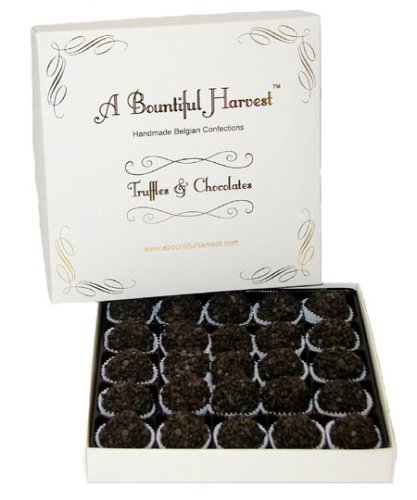
Bites: Chocolate is a Healthy Valentine

Those who receive chocolates on Valentine's Day should fall in love with the news that chocolate contains flavonoids and other compounds that have proven health benefits.

Flavonoids are naturally occurring compounds in plant-based foods that serve as antioxidants in the human body. Antioxidants protect bodies from damage caused by free radicals. Free radicals are formed in simple body processes and can increase with environmental contaminants.

For example, every cell in the human body needs oxygen to work. When the body cells burn oxygen, there is a by-product (a free radical) produced.  A free radical is an unstable molecule with a missing electron. It tries to ‘steal’ an electron from other body cells so it can become stable. This process of stealing from other body cells can lead to cell instability and can contribute to health problems such as cancer and heart disease.

The role of the antioxidant is that it provides the electron to the free radical so that it can be eliminated without causing damage.

A study conducted at the University of California found that persons who consumed 1.6 oz (about a regular sized candy bar) of flavonoid-rich chocolate every day for two weeks showed an expansion of the arteries and an increased blood flow of 10 percent.

Participants who consumed flavonoid-poor chocolate experienced a slight decrease. Increased blood flow means reduced cardiovascular risk.

Source: Tammy Roberts, nutrition and health education specialist, University of Missouri Extension.

Chocolates
Valentine's Day
Dark Belgian Chocolate Truffles
Chocolate Golf Balls

Wednesday, February 2, 2011

Tangerine Tomatoes Surpass Reds in Lycopene

A new U.S. Department of Agriculture (USDA) study suggests that, ounce for ounce, the heirloom tangerine tomato is a better source of a powerful antioxidant called lycopene than more familiar red tomatoes.

The difference lies in the forms of lycopene that the two tomato types provide, according to chemist Betty J. Burri at the Agricultural Research Service (ARS) Western Human Nutrition Research Center in Davis, California. The trans-lycopene form, or isomer, makes up most of the lycopene in common red tomatoes. In contrast, most of the lycopene in tangerine tomatoes is tetra-cis-lycopene.

Results of the California investigation and one conducted by scientists in Ohio suggest that the tangerine tomato's tetra-cis-lycopene is more efficiently absorbed by the body than is the trans-lycopene of red tomatoes.

Source: Agricultural Research Service

Tomatoes
Farm Produce
Plants and Seeds

Thursday, November 4, 2010

Defining Sweetness in Wine

"Sweetness in wine is different than sweetness in a candy bar. As you chew milk chocolate, you are perceiving sweetness. Wine can’t be assessed for sweetness until after the sip is swallowed. What we taste as the wine is in our mouth is fruit. "When I teach about wine, I stress the importance of the 'end,' or finish. The palate’s last impression of a wine helps the brain evaluate the structure, balance, and sweetness of the wine."

Source: Deborah Goldstein, LearnVest

Here's How To... Make Wine
Grapes

Tuesday, October 26, 2010

A Model for Smoked Salmon Safety

Scientists with the U.S. Department of Agriculture (USDA) have developed a mathematical model providing optimal combinations of temperature, salt and smoke compounds to reduce microbial contamination of smoked salmon.

Typically sold in vacuum packages that have a refrigerator shelf life of about three to eight weeks, smoked salmon can be susceptible to pathogenic microbes such as Listeria monocytogenes can live at refrigerator temperatures.

In their studies, researchers added salt and smoke compounds to cooked salmon, then inoculated the fish with Listeria monocytogenes. Next, the scientists exposed the salmon to a range of temperatures, from 104 degrees Fahrenheit to 131 degrees F to simulate commercial smokehouse processing.

Regarded as mid-range, these temps are higher than those used for cold-smoking, the most popular commercial salmon-smoking process, but are lower than those of the lesser-used commercial hot-smoking procedure.

The researchers determined that every 9 degree F increase in temperature resulted in a 10-fold increase in rates of inactivation of Listeria. They used this and other data from the study to create the mathematical model.

Source: Agricultural Research Service

Sunday, October 3, 2010

100% Fruit Juice Improves Children's Diet

Consumption of 100 percent fruit juice is closely linked to improved nutrient intake and overall diet quality in children and teens, according to researchers at the Louisiana State University Agricultural Center and Baylor College of Medicine

The researchers used data from the 2003-2006 National Health and Nutrition Examination Survey (NHANES) to compare the diets of juice drinkers to non-consumers.

According to the findings, children 2-5 years of age who consumed fruit juice had significantly higher intakes of vitamin C, potassium, and magnesium and significantly lower intakes of added sugars compared to non-fruit juice consumers.

In addition, higher intake of fruit juice was directly correlated with increased consumption of whole fruits and whole grains.

Children 6-12 years of age showed a similar positive association between intake of 100 percent juice and higher intakes of the key nutrients, as well as dietary fiber. Overall diet quality, as assessed by the Healthy Eating Index (a measure that evaluates conformance to federal dietary guidance) was higher in all fruit juice consumers assessed.

The researchers reported that a significantly higher percentage of non-fruit juice consumers 2-18 years of age failed to meet the recommended levels for several key nutrients, including vitamins A and C and folate, compared to those who drank 100 percent juice. Comparatively, a greater percentage of those in the fruit juice group exceeded Adequate Intake levels for calcium versus non-consumers.

"One hundred percent fruit juice plays an important role in the diets of children and teens, supplying important nutrients during a key period of growth and development," notes lead researcher Dr. Carol O'Neil. "Drinking 100 percent juice should be encouraged as part of an overall balanced diet."

Source: Juice Products Association

Friday, October 1, 2010

Goodbye Nut Allergies

Johns Hopkins scientists have discovered a way to turn off the immune system's allergic reaction to certain food proteins in mice, a discovery that could have implications for the millions of people who suffer severe reactions to foods, such as peanuts and milk.

The findings, published online in the journal Nature Medicine, provide hope that the body could be trained to tolerate food allergies that lead to roughly 300,000 emergency room visits and 100 to 200 deaths each year.

The research team, led by Shau-Ku Huang, Ph.D.,discovered that one kind of immune cell in the gastrointestinal tract called lamina propria dendriti cells (LPDC) -- considered the first line of defense for a body's immune system -- expresses a special receptor, SIGNR1, which appears on the cells' surface and binds to specific sugars.

By targeting this receptor using sugar-modified protein, researchers were able to keep food proteins that would have induced a severe, even deadly, allergic reaction from causing any serious harm.

"There is no cure for food allergies, and the primary treatment is avoidance of the offending protein," Zhou says. "This could teach our bodies to create a new immune response and we would no longer be allergic to the protein."

The researchers hope to confirm whether this promising process in mice can also occur in people.

Wednesday, September 29, 2010

Blueberries Fight Artery Hardening

A new U.S. Department of Agriculture (USDA)-funded study offers the first direct evidence that blueberries help fight atherosclerosis, also known as hardening of the arteries.

The study compared the size, or area, of atherosclerotic lesions in 30 young laboratory mice. Half of the animals were fed diets spiked with freeze-dried blueberry powder for 20 weeks; the diet of the other mice did not contain the berry powder.

Lesion size, measured at two sites on aorta (arteries leading from the heart), was 39 and 58 percent less than that of lesions in mice whose diet did not contain blueberry powder.

Earlier studies, conducted elsewhere, have suggested that eating blueberries may help combat cardiovascular disease. But direct evidence of that effect has never been presented previously.

The blueberry-spiked diet contained 1 percent blueberry powder, the equivalent of about a half-cup of fresh blueberries.

All mice in the investigation were deficient in apolipoprotein-E, a trait which makes them highly susceptible to forming atherosclerotic lesions and thus an excellent model for biomedical and nutrition research.

In followup studies, researchers hope to determine whether eating blueberries in infancy, childhood and young adulthood would help protect against onset and progression of atherosclerosis in later years. Early prevention may be especially important in light of the nation's epidemic of childhood obesity. Overweight and obesity increase atherosclerosis risk.
  • Sources: Principal investigator Xianli Wu, based in Little Rock, Ark., with the USDA Agricultural Research Service (ARS) Arkansas Children's Nutrition Center and with the University of Arkansas for Medical Sciences, led the investigation. The findings are reported in the current issue of the Journal of Nutrition.
  • Farm Produce
  • Blueberries