Sunday, May 6, 2012

Salty and Sweet


From birth, saltiness is built into our taste perceptions as an attractive taste.


Just as addictive drugs activate brain mechanisms that make them hard to resist, a strong desire for salty flavors compels us to say "Pass the salt."


Children, in particular, crave intense sweet, sour, and salty tastes. This makes them especially susceptible to the outlaws of obesity - sweet foods, salt and fat.

adapted from Neurogastronomy 
How the Brain Creates Flavor and Why It Matters
by Gordon M. Shepherd

Thursday, May 3, 2012

Supermarket Effect


"The variety of food types and flavors encourages overeating. The brain is always interested in something new or changing. Eating the same food or flavor, we quickly become full and bored with eating. But at a Thanksgiving dinner or a buffet or banquet, it is easy to find stimulation for renewed eating."

How the Brain Creates Flavor and Why It Matters
by Gordon M. Shepherd
Artwork: Supermarket Blur


Friday, March 23, 2012

Pink Slime Safer Than Regular Ground

Whether you call it "pink slime" or LFTB (lean, finely textured beef), you can call it a much-maligned product at the heart of an emotional controversy fueled by misinformation, according to a meat expert in Penn State's College of Agricultural Sciences.


The stuff made headlines when it was reported that the federal government plans to buy ground beef that contains the product in the coming year for use in the national school lunch program's beef products. After a newspaper broke the story, a national furor erupted, and "pink slime" became the most searched topic on the Internet.

"Claims made that this product is not safe are blatantly untrue," says animal sciences professor Edward Mills. "From a microbial-pathogen point of view, the product has a better reputation than straight ground beef.

The material in question is lean meat that remains on fat trimmings removed from beef carcasses and that cannot be reclaimed with a knife cost effectively. This remaining meat is separated from fat in a mechanical process that involves heating minced trimmings only to about body temperature (100 degrees) then centrifuging to separate lean from fat.

"There was a significant amount of lean going to waste that now is recovered," Mills explains. "The regulatory wing of USDA says that this product fits in the same category as boneless lean meat. It is the consistency of baby food and most often used along with conventional boneless beef to make ground beef."

Because the trimmings may harbor dangerous pathogens that can cause foodborne illness, they are decontaminated with either ammonia gas or citric acid.

"We live in a culture where emotions consistently trump logic and reason, and this is one of those. The only sound condemnation of the product is that it just looks bad. But the fact remains -- it is a low-cost source of very lean ground beef."

When to Eat What
The Meat Buyers Guide : Meat, Lamb, Veal, Pork and Poultry
Artwork: Hamburger Patties


Monday, February 20, 2012

Alcohol is a Fountain of Youth


UCLA biochemists have discovered a fountain of youth in tiny drops of alcohol, for worms at least.

In a recent study, minuscule amounts of ethanol - the type of alcohol found in alcoholic beverages - more than doubled the life span of a tiny worm known as Caenorhabditis elegans.

The scientists are dumbfounded.

Continued Out There


Sunday, December 25, 2011

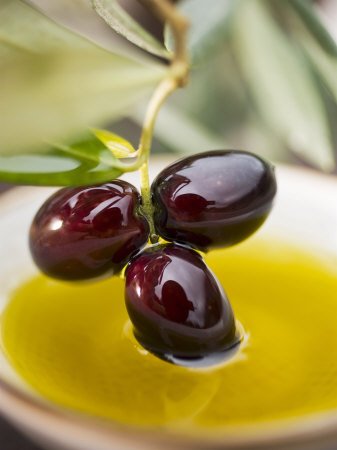
Virgin Olive oil, Fish Fatty Acids Can Prevent Acute Pancreatitis


Researchers at the University of Granada Physiology Department have discovered that Oleic acid and hydroxytyrosol found in virgin olive oil and n-3 polyunsaturated fatty acids found in fish affect the cellular mechanisms involved in the development of acute pancreatitis. Including them in one's diet may prevent or mitigate the disease.

In the first study to examine how fatty acids and antioxidants affect the cellular mechanisms that respond to local inflammation in the pancreas, the University of Granada scientists evaluated the role of antioxidants from a preventive approach. In their experiments on mice, they induced cell damage after the mice had been fed the fatty acids and antioxidants.

"There is increasing evidence that there are oxidative-inflammatory processes involved in the origin of chronic diseases and that diet plays an important role in such processes,' said the study's author, María Belén López Millán.


Source:
María Belén López Millán.  University of Granada Physiology Department. Phone Number: +34 958241000 Ext. 2031


Sunday, December 18, 2011

A Few Squares of Chocolate a Day Keeps the Coronary Away


Some "chocoholics" who just couldn't give up their favorite treat to comply with a study to test blood stickiness have inadvertently done their fellow chocolate lovers - and science - a big favor.

Their "offense," say researchers at Johns Hopkins led to what is believed to be the first biochemical analysis to explain why just a few squares of chocolate a day can almost halve the risk of heart attack death in some men and women by decreasing the tendency of platelets to clot in narrow blood vessels.

"What these chocolate 'offenders' taught us is that the chemical in cocoa beans has a biochemical effect similar to aspirin in reducing platelet clumping, which can be fatal if a clot forms and blocks a blood vessel, causing a heart attack," says Diane Becker, M.P.H., Sc.D., a professor at the Johns Hopkins University's School of Medicine and Bloomberg School of Public Health.

Continued in... A Few Squares of Chocolate a Day Keeps the Coronary Away

Chocolates
Farm Kitchen Guide: Chocolate


Tuesday, October 4, 2011

Vitamin D Reduces Risk of Heart Disease

A new report based on an extensive 75 previous studies strongly suggests a link between low levels vitamin D and increased risk for cardiovascular disease.

Vitamin D comes from exposure to the sun. Twenty minutes of sun exposure daily is recommended.

Good food sources include fatty fish such as salmon, tuna and mackerel as well as cod liver oil, milk and foods fortified with Vitamin D including some orange juices, breads and cereals.

Low levels of Vitamin D have previously been linked with weak and brittle bones.

Sources: Journal of the American College of Cardiology