Thursday, August 4, 2011

Eating Healthy at a Barbecue

The main course is often burgers and hot dogs - maybe some sausages or barbecued chicken. Stay away from the hot dogs and sausages.

However
, a simple, small burger would be a diet-friendly choice. These days they may even have a few veggie burgers on the grill, an even healthier choice. If there's grilled chicken available, grab a breast, peel off the skin, and feel comfortable eating a piece about the size of the palm of your hand.

For a refreshing dessert, try to have some sort of fruit, be it a slice of melon or a colorful salad.
~ from When to Eat What by by Heidi Reichenberger McIndoo

Kitchen Supply: Outdoor Cooking
Recipe: Victory Chicken

Thursday, July 14, 2011

Fish is Heart Healthy

Eating fish can reduce the risk of dying from a heart attack by one-third, leading the American Heart Association to recommend a diet that includes at least three ounces of fish twice per week.

The heart healthiest fish are fatty fish that are high in omega three fatty acids according to Tammy Roberts, nutrition and health education specialist with University of Missouri Extension. That includes fish like salmon, mackerel and herring. Tuna has omega three fatty acids but not as much as the others listed.

"Some people shy away from fish because of possible contaminants such as mercury, polychlorinated biphenyls (PCBs) and pesticide residues. There are warnings for
women of childbearing age and young children for shark, swordfish, king mackerel and tilefish," said Roberts.

The Environmental Protection Agency, the Food and Drug Administration and an Institute of Medicine report have all concluded, however, that there is not enough evidence to recommend limitations on fish for most adults.

Friday, March 25, 2011

Peanut Skins High in Resveratrol

The skins of peanuts contain high levels of resveratrol, the bioactive compound associated with red wine and the “French paradox,” according to a University of Georgia food scientist. “Resveratrol is associated with reduced cardiovascular disease and has anti-aging, -cancer and –inflammatory factors,” says Anna Resurreccion of the College of Agricultural and Environmental Sciences.

After red wine, red grape juice and dark chocolate, roasted peanuts are one of the important sources of resveratrol. And when consumed with skins, they provide about three times more resveratrol compared to peanuts with the skins removed.

Nuts & Grains
Peanuts
Virginia Peanut Seeds

Friday, February 11, 2011

Bites: Chocolate is a Healthy Valentine

Those who receive chocolates on Valentine's Day should fall in love with the news that chocolate contains flavonoids and other compounds that have proven health benefits.

Flavonoids are naturally occurring compounds in plant-based foods that serve as antioxidants in the human body. Antioxidants protect bodies from damage caused by free radicals. Free radicals are formed in simple body processes and can increase with environmental contaminants.

For example, every cell in the human body needs oxygen to work. When the body cells burn oxygen, there is a by-product (a free radical) produced.  A free radical is an unstable molecule with a missing electron. It tries to ‘steal’ an electron from other body cells so it can become stable. This process of stealing from other body cells can lead to cell instability and can contribute to health problems such as cancer and heart disease.

The role of the antioxidant is that it provides the electron to the free radical so that it can be eliminated without causing damage.

A study conducted at the University of California found that persons who consumed 1.6 oz (about a regular sized candy bar) of flavonoid-rich chocolate every day for two weeks showed an expansion of the arteries and an increased blood flow of 10 percent.

Participants who consumed flavonoid-poor chocolate experienced a slight decrease. Increased blood flow means reduced cardiovascular risk.

Source: Tammy Roberts, nutrition and health education specialist, University of Missouri Extension.

Chocolates
Valentine's Day
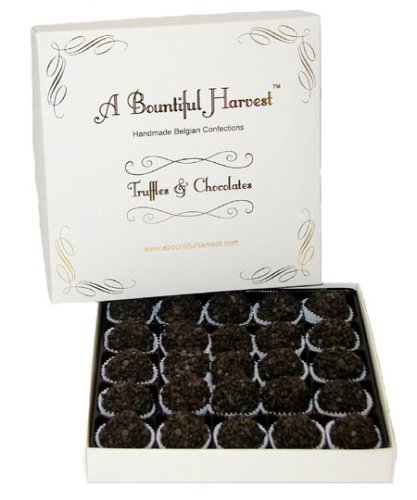
Dark Belgian Chocolate Truffles
Chocolate Golf Balls

Wednesday, February 2, 2011

Tangerine Tomatoes Surpass Reds in Lycopene

A new U.S. Department of Agriculture (USDA) study suggests that, ounce for ounce, the heirloom tangerine tomato is a better source of a powerful antioxidant called lycopene than more familiar red tomatoes.

The difference lies in the forms of lycopene that the two tomato types provide, according to chemist Betty J. Burri at the Agricultural Research Service (ARS) Western Human Nutrition Research Center in Davis, California. The trans-lycopene form, or isomer, makes up most of the lycopene in common red tomatoes. In contrast, most of the lycopene in tangerine tomatoes is tetra-cis-lycopene.

Results of the California investigation and one conducted by scientists in Ohio suggest that the tangerine tomato's tetra-cis-lycopene is more efficiently absorbed by the body than is the trans-lycopene of red tomatoes.

Source: Agricultural Research Service

Tomatoes
Farm Produce
Plants and Seeds

Thursday, November 4, 2010

Defining Sweetness in Wine

"Sweetness in wine is different than sweetness in a candy bar. As you chew milk chocolate, you are perceiving sweetness. Wine can’t be assessed for sweetness until after the sip is swallowed. What we taste as the wine is in our mouth is fruit. "When I teach about wine, I stress the importance of the 'end,' or finish. The palate’s last impression of a wine helps the brain evaluate the structure, balance, and sweetness of the wine."

Source: Deborah Goldstein, LearnVest

Here's How To... Make Wine
Grapes

Tuesday, October 26, 2010

A Model for Smoked Salmon Safety

Scientists with the U.S. Department of Agriculture (USDA) have developed a mathematical model providing optimal combinations of temperature, salt and smoke compounds to reduce microbial contamination of smoked salmon.

Typically sold in vacuum packages that have a refrigerator shelf life of about three to eight weeks, smoked salmon can be susceptible to pathogenic microbes such as Listeria monocytogenes can live at refrigerator temperatures.

In their studies, researchers added salt and smoke compounds to cooked salmon, then inoculated the fish with Listeria monocytogenes. Next, the scientists exposed the salmon to a range of temperatures, from 104 degrees Fahrenheit to 131 degrees F to simulate commercial smokehouse processing.

Regarded as mid-range, these temps are higher than those used for cold-smoking, the most popular commercial salmon-smoking process, but are lower than those of the lesser-used commercial hot-smoking procedure.

The researchers determined that every 9 degree F increase in temperature resulted in a 10-fold increase in rates of inactivation of Listeria. They used this and other data from the study to create the mathematical model.

Source: Agricultural Research Service